Hazipa Alert · First product concept
The warning triangle, connected.
When a roadside warning device is deployed, it should do more than warn nearby traffic. Hazipa Alert explores how that physical action can also communicate a digital hazard event to the systems and people responsible for responding.
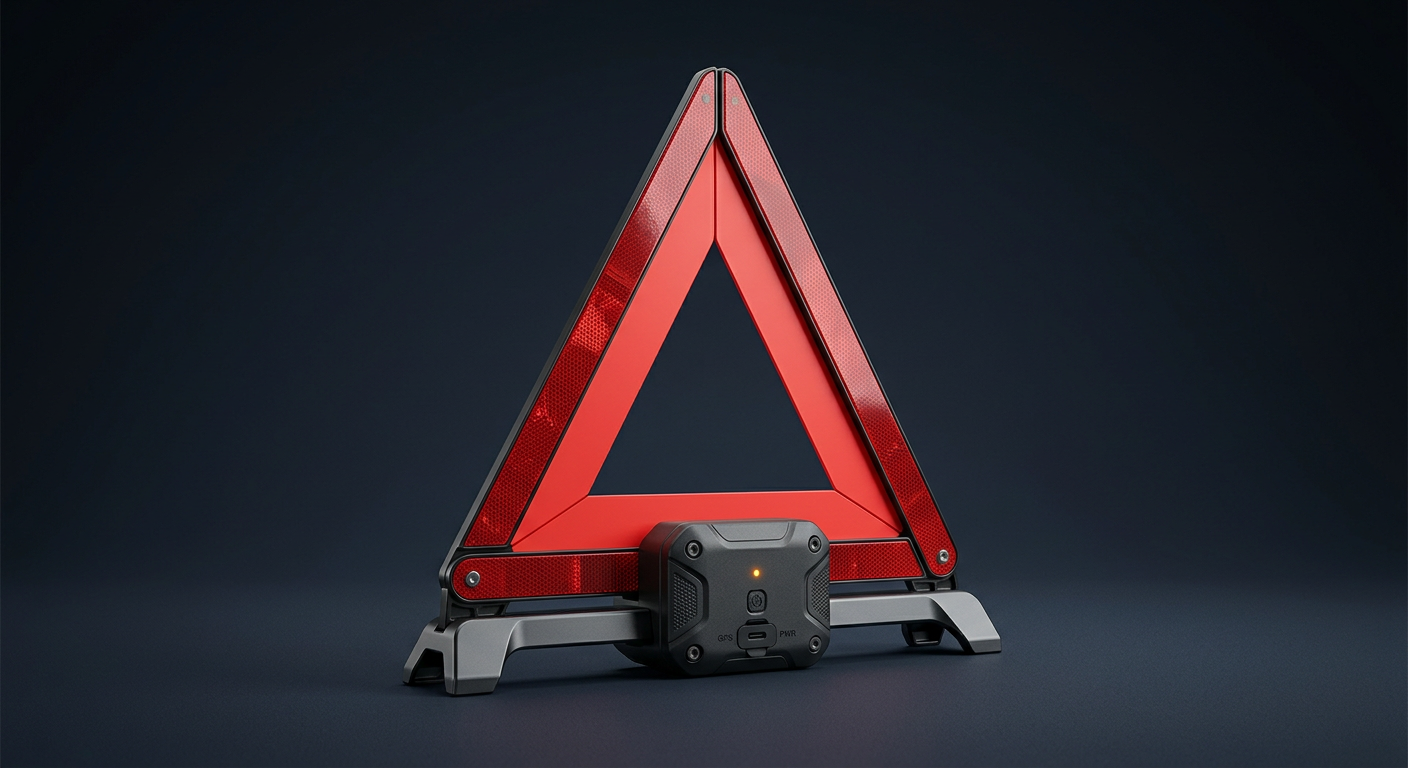 Concept render
The gap
A triangle warns the road. It can't call for help.
When a commercial vehicle becomes immobilized, the traditional warning triangle alerts nearby motorists — but it cannot itself notify a fleet control room, assistance provider or maintenance team.
Hazipa Alert is the first product concept in a wider connected roadside safety portfolio — designed to turn a familiar safety step into a signal the right people can act on, via Hazipa Network.
Hazipa Alert is intended to complement — not replace — legally required physical warning measures and applicable road rules.

Intended experience
From roadside to response.
How the Hazipa Alert concept is designed to work in practice.
- Step 1
Incident occurs
A roadside incident occurs.
- Step 2
Warning deployed
The driver deploys an appropriate warning device safely, in line with applicable road rules.
- Step 3
Activation detected
A compatible connected device detects activation.
- Step 4
Event communicated
Available location and incident information can be communicated.
- Step 5
Teams informed
Authorized fleet or response teams can receive relevant information.
- Step 6
Event closed
The event can be updated and closed through an associated workflow.
Configurations
Two potential ways to connect.
Both configurations are under evaluation and remain subject to hardware design, testing and deployment requirements.
Vehicle-connected
The warning triangle communicates with compatible installed vehicle hardware, potentially through a short-range wireless connection.
Suited to fleets with existing in-vehicle telematics.
Standalone-connected
A self-contained connected configuration may provide location and communication functionality without relying on a vehicle-mounted telematics unit.
Suited to mixed fleets or vehicles without installed hardware.
Development objectives
What we're designing it to do.
These are development objectives, not a finished specification. Battery life, range, certification, availability and pricing will be confirmed as the product matures.
- Activation-triggered event notification
- Vehicle or standalone connectivity
- Incident location sharing
- Fleet-platform integration
- Response workflow initiation
- Battery and device-status monitoring where supported
Beyond the triangle
Connected safety beyond roadside breakdowns.
The same principle could apply to other temporary safety equipment. These are potential future applications being explored — not products available today.
- Temporary roadworks signs
- Connected cones and barriers
- Hazard-zone markers
- Private roads and industrial environments
Help shape the next generation of connected roadside safety.
We're looking for fleets and partners to help evaluate configurations, workflows and real-world requirements through early pilots.